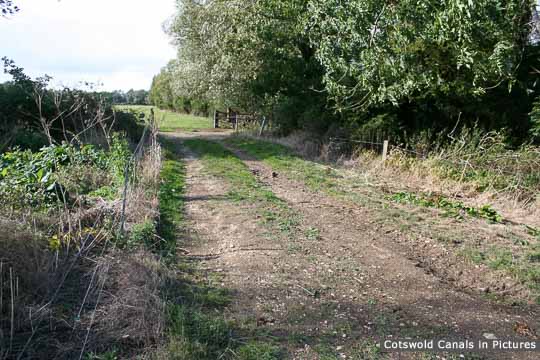
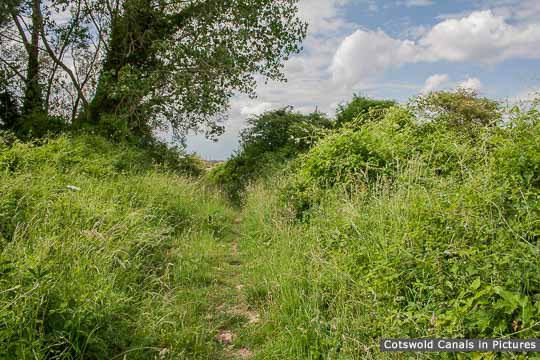
Dudgrove Double Lock has two chambers (upper and lower) and three pairs of gates.
The overall fall of the lock is 3.5m (11ft 6in). The fall of the upper chamber is 2.74m (9ft), with the lower being 0.76m (2ft 6in).
Initially, Dudgrove was built as a conventional (single) lock, which is brick-built and resembles many others on the Thames & Severn Canal.
The lower chamber was somewhat of an afterthought, and is of a ‘dry-stone wall’ construction with no mortar between the stones.
This came about because when the lock was first built (the upper chamber), the exact point at which the canal would join the nearby River Thames had not been agreed with the Thames Commissioners. This resulted in a late change of levels that required an extra lock to be ‘tacked-on’ to the first.
Because there is a substantial difference in fall between the upper and lower chambers, the lower chamber would overflow when the upper chamber is emptied into it. To prevent this, the lower chamber is significantly longer than the upper - about 1.5 times as long - and a spill weir is incorporated to divert excess water around the bottom lock gates (see map below).
Today the lock remains intact but in a poor state of repair.
Please note that Dudgrove Double Lock is on private property and unauthorised access is not welcome.
(Tap / click images to enlarge)